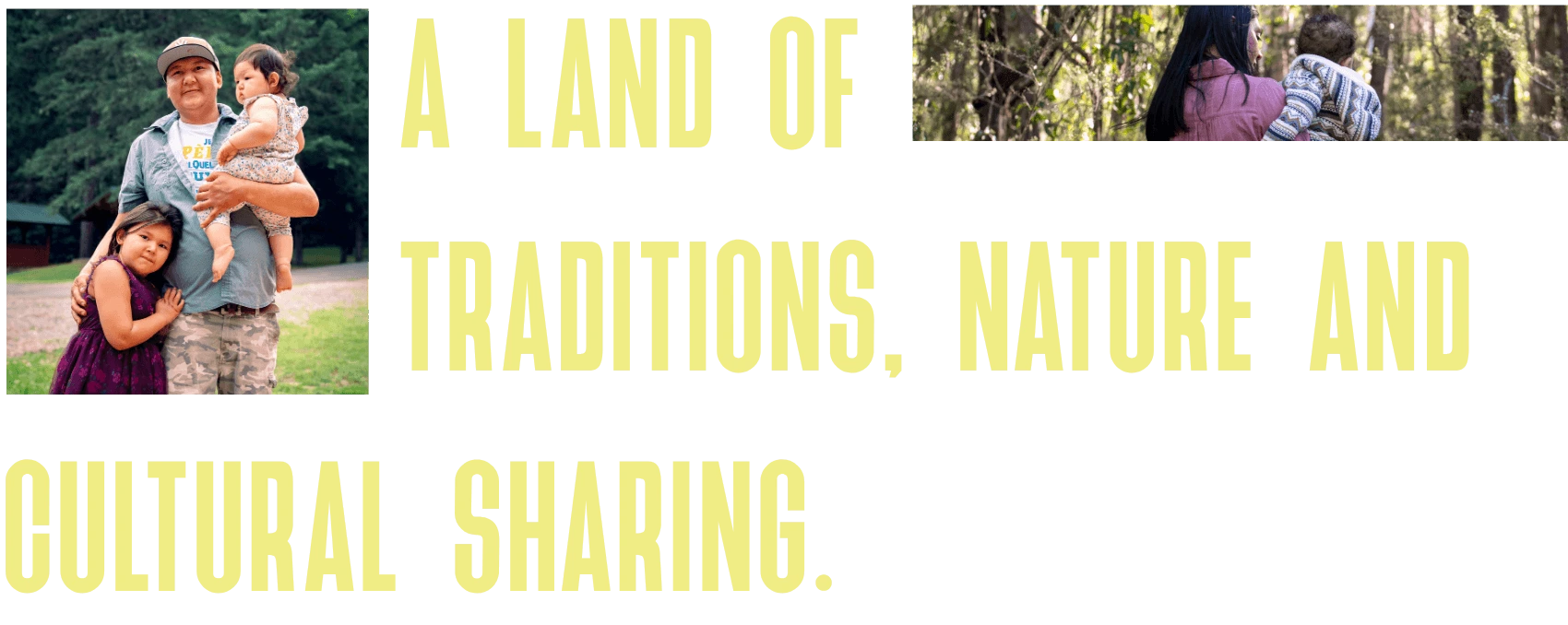
A land of generous people, rich traditions, and sustainable development of natural resources. The Indigenous communities of Mauricie are people who cherish their culture and take joy in sharing their language, stories, and knowledge with others.
Kwei! The communities of Wemotaci and Opitciwan are forging their path through respect for traditions, the environment, and economic development. Masters of bark craftsmanship, these hands-on artisans have perfected their art down to their fingertips. Deeply rooted in their culture, 95% of the Atikamekw Nation still speak their native language—a fundamental element of their identity.
Discover WemotaciDiscover Opitciwan
Their way of life follows the rhythm of six seasons: Sikon (pre-spring), Miroskamin (spring), Nipin (summer), Takwakin (autumn), Pitcipipon (pre-winter), and Pipon (winter).
The name Atikamekw means “whitefish,” a species highly valued by the Nation since its origins
The Atikamekw language is the most vibrant Indigenous language in the country: each community has even developed its own variations. Discover them by downloading the Conversation: Atikamekw app developed by the Atikamekw Nation Council
Each year is marked by a celebration where everyone is welcome to participate.
All communities celebrate the Pow-Wow, a festive event open to both Indigenous and non-Indigenous people.
Discover the Pow-WowCultural appreciation or cultural appropriation?
Learn how to celebrate Indigenous culture while respecting traditions.
En savoir plusBefore visiting, it’s important to get informed.
Indigenous communities are welcoming and generous, but very different from non-Indigenous Mauriciens. Getting informed is the key to meaningful and enriching cultural exchanges.
5 conseils pour comprendre les réalités autochtones
KWEI! DISCOVER THE ATIKAMEKW LANGUAGE
The Atikamekw Nation Council has published two dictionaries (Atikamekw/French and French/Atikamekw) to promote their language, available upon request. An interactive online version is also available to help us learn this unique language. Practice your Atikamekw!
How are you? ——————- Tan e ici pimatisin ia?
My name is… ———————– Nit icinikason…
Hello! ——————————- Kwei!
Where are you from? ———————— Tante wetciin?
See you later! ————————— Kecko minawatc!
Enjoy your meal! ————————– Miro mitciso!
Have a nice day! ———————– Miro kicikanisi!
